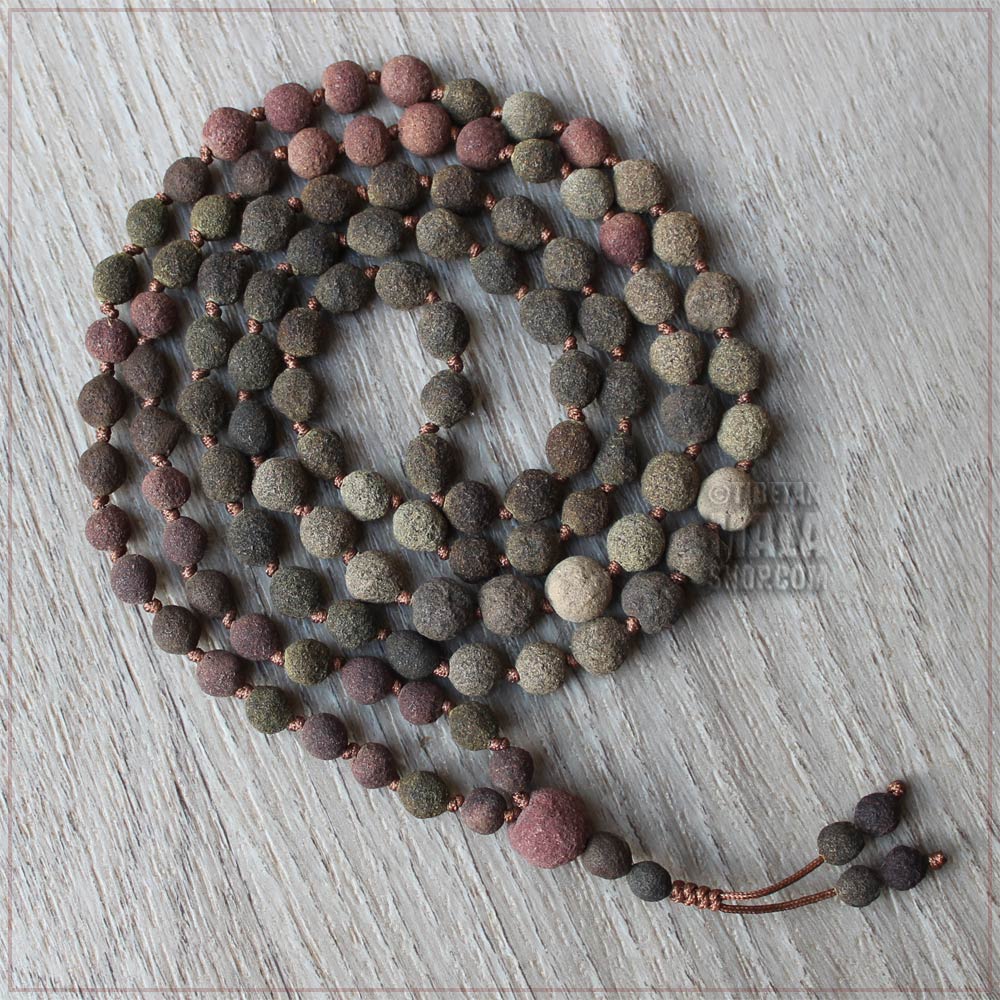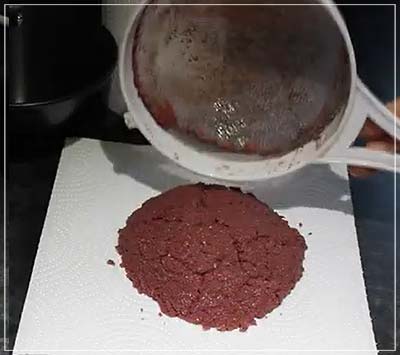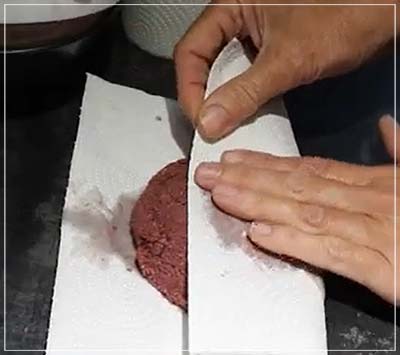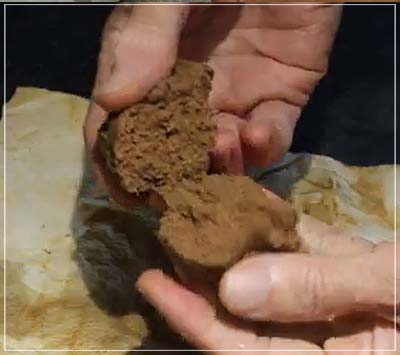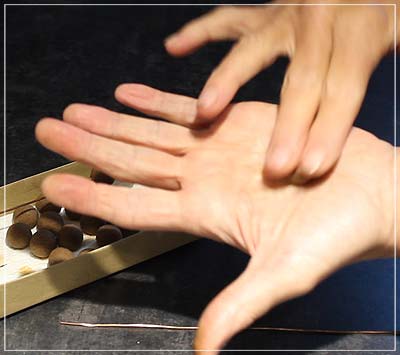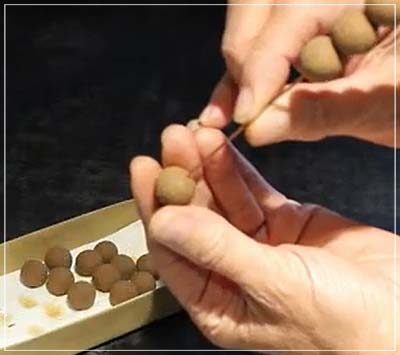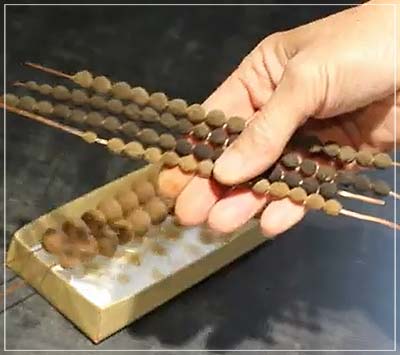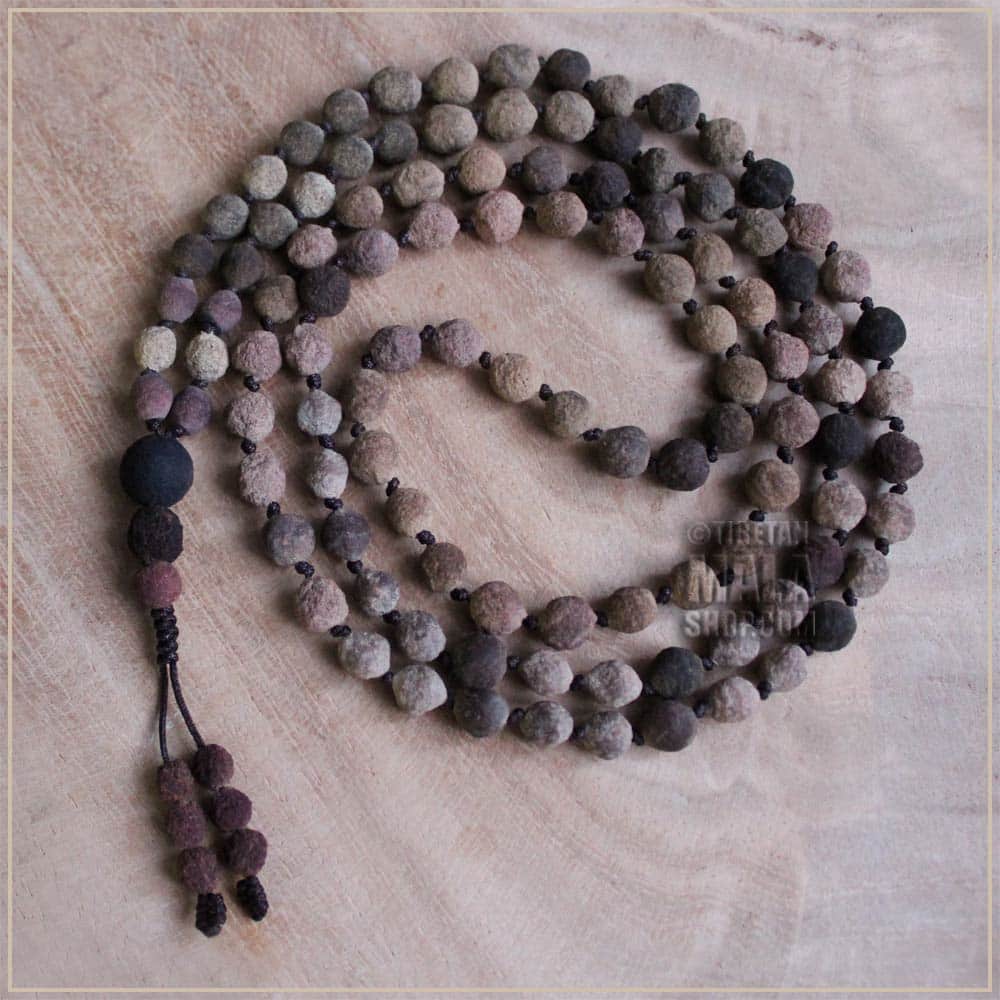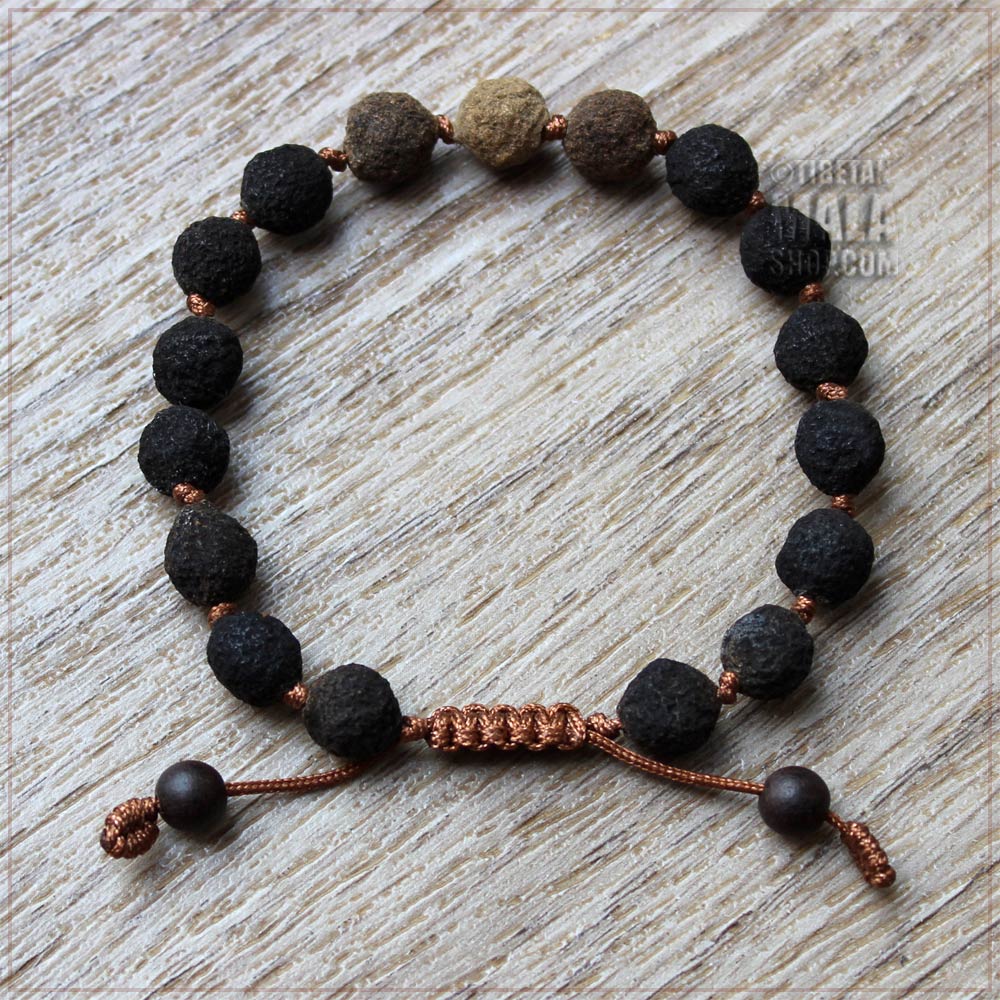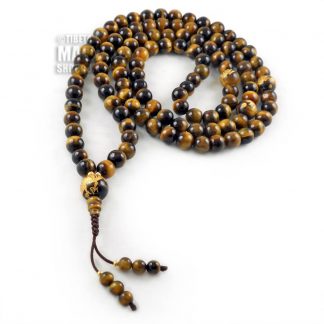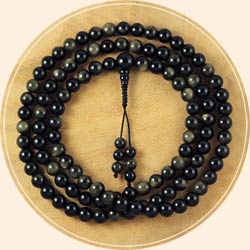

Rose Petals & pure water are cooked & blended to form a “clay” that is hand rolled into beads. Making beads from rose petals is a lengthy process! As each bead is rolled it is blessed & infused with the multiplying mantra ~ OM RUCHIRA MANI PRAVARTAYA HUM
Once dry, the beads are strong and hard. The natural fragrance of the rose petals gives the beads a delicate scent. We don’t add any fragrance, or anything else, just rose petals & spring water.
Please don’t get them damp, wet or spray perfume near them.
Follow our 12-step process below to see how we craft each bead. The finished 108 bead rose petal malas can be purchased here from our online shop. We offer a wide selection of rose petal beads for custom malas. Simply email us with your request to begin your order.
Watch our step-by-step video guide on our YouTube channel to see the rose petal bead making process in action.
STEP 1.
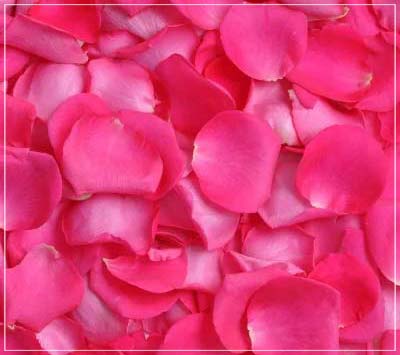
Collect fresh or dried rose petals. If using fresh petals, wash them with clean water
STEP 2.
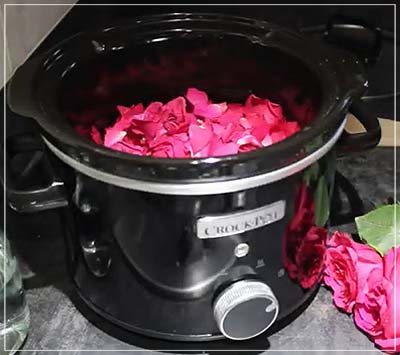
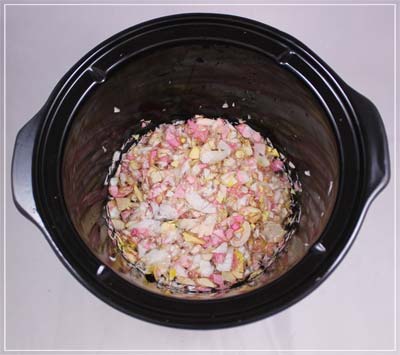
Cut the petals into small pieces and place in a slow cooker with spring water, just enough water to cover them
STEP 3.
Cook on medium heat for several hours, or until the rose petals soften and become slightly transparent
STEP 4.
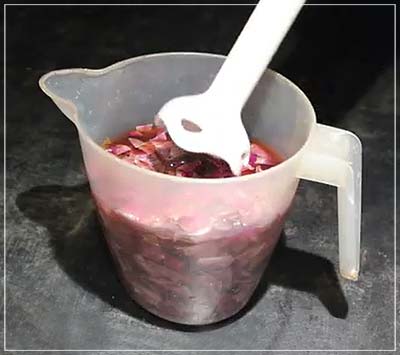
Cool the petals, transfer them to a jug and blend using a hand blender
STEP 5.
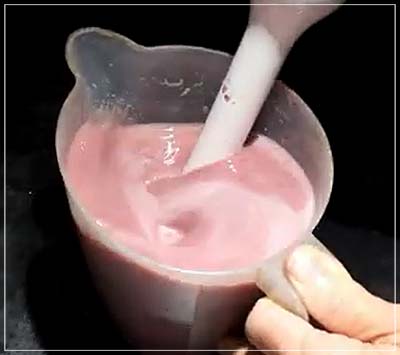
Blend the rose petals until smooth and all lumps are gone, the consistency of cream or a smoothie
STEP 6.
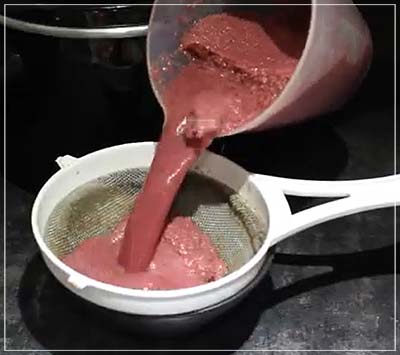
Leave the mixture to settle for a couple of hours then sieve it to remove excess water
STEP 7.
Leave to dry over night, then turn out the sieved rose petal pulp on to kitchen paper to dry out further
STEP 8.
Wrap the pulp in kitchen paper and leave to dry. Knead and change the kitchen paper every few days
STEP 9.
After 2 weeks the pulp is like plasticine and ready to make the beads
STEP 10.
Compress and pat small pieces of pulp, and roll them into round balls
STEP 11.
Let the beads set overnight, then thread a wire through the middle of each bead to form the hole
STEP 12.
Allow the beads to dry for several weeks, then string them together to create your mala beads or bracelet
Choosing a mala is more than a simple purchase; it is the beginning of a spiritual partnership. Whether you seek a tool for deep mantra meditation or a physical anchor for daily mindfulness, the right beads must resonate with your personal energy and aesthetic standards. Use this guide to navigate the essential elements of a high-quality mala, from sacred materials to the precision of the finish.
1. Define Your Intention
Before looking at stones or seeds, identify the primary purpose of your mala. Are you seeking physical healing, emotional balance, or a tool for counting 108 mantras?
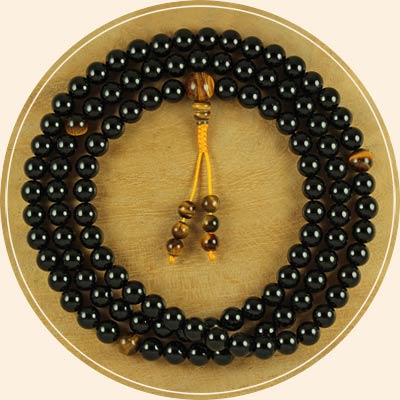
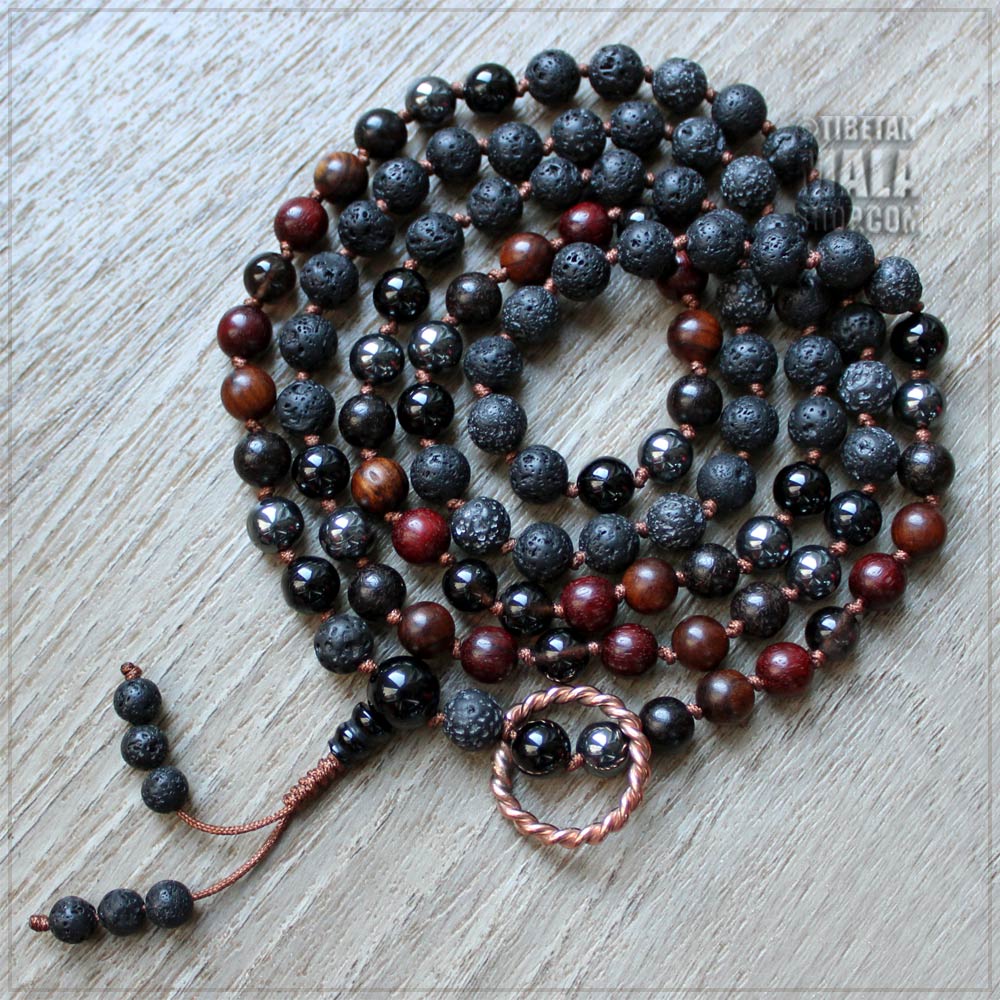
For Grounding: select earthy materials like Rudraksha seeds or Lava Rock. These organic materials connect you to the physical plane. Black Onyx is great for grounding, strength and for staying focused during stressful times and absorbing negative energy.
For Inner Peace & Focus: choose Sandalwood for calming a busy mind and bringing a sense of “zen” to your space.
Truth & Wisdom: choose Lapis Lazuli for strengthening your intuition and speaking your authentic truth
Compassion & Love: choose Rose Quartz or Aventurine for healing emotional wounds and opening the heart to self-love.
Intuition & Calm: choose Amethyst for deepening meditation and connecting to higher states of consciousness.
Amplification: choose Clear Quartz for magnifying the power of your mantras and clearing mental “fog.”
Enlightenment: choose Bodhi Seed for connecting to ancient lineage and the traditional path of the Buddha.
2. Deity & Mantra
In Buddhist tradition, choosing a mala based on a specific deity and mantra is about aligning the physical material of the beads with the energetic qualities and vows of that figure.
Medicine Buddha: The Medicine Buddha represents healing and the purification of physical and mental ailments. He is traditionally depicted as Lapis Lazuli blue. The colour reflects the “Lapis Lazuli Light” that emanates from him, symbolising the clarity of a healed mind.
Shakyamuni Buddha: Choosing a mala for the Shakyamuni Buddha mantra (Om Muni Muni Mahamuniye Svaha) typically focuses on materials that represent awakening, simplicity, and the historical lineage of the Buddha. Ideal Materials are Bodhi Seed, sandalwood, clear quartz, citrine and carnelian.
Chenrezig: The Bodhisattva of infinite compassion. Chenrezig is often associated with purity and the “Jewel in the Lotus.” Ideal Materials are Lotus Seed or Clear Quartz. These materials represent the stainless, pure nature of compassion.
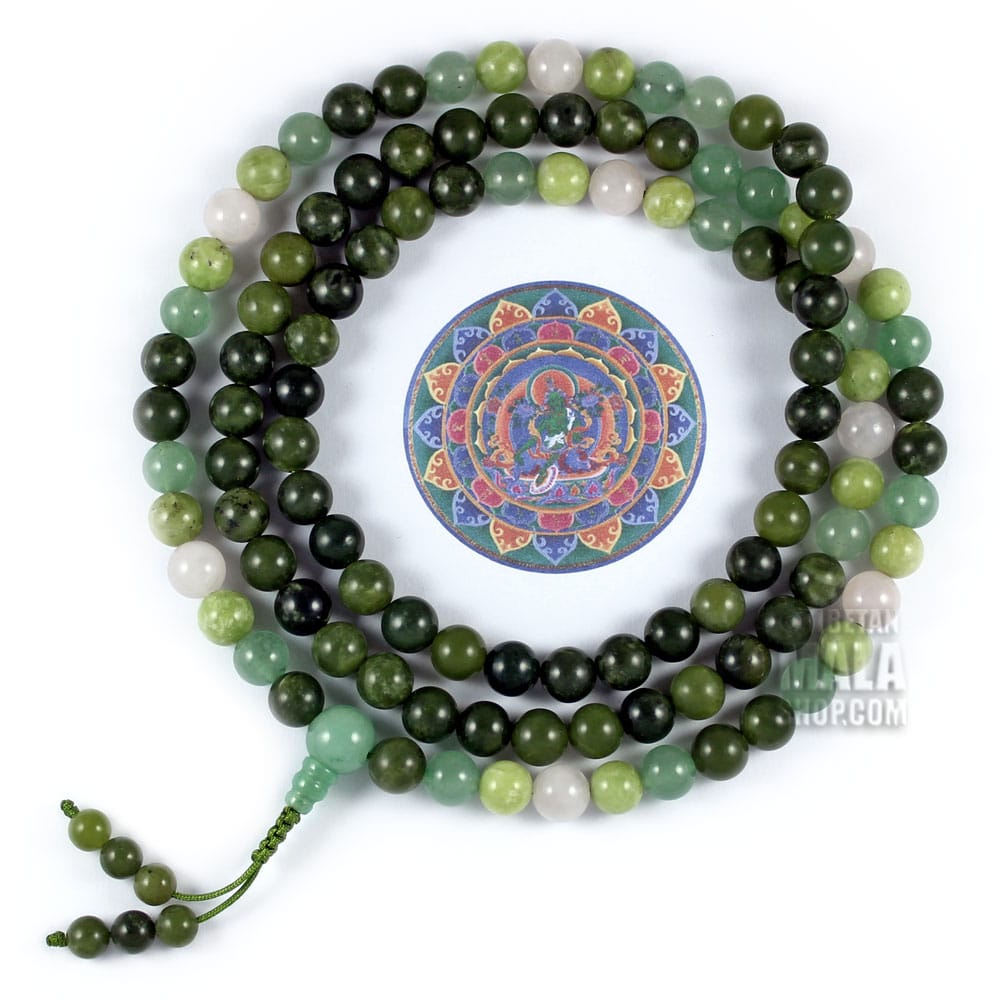
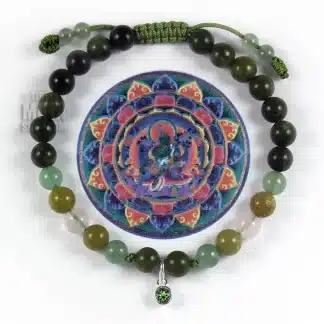
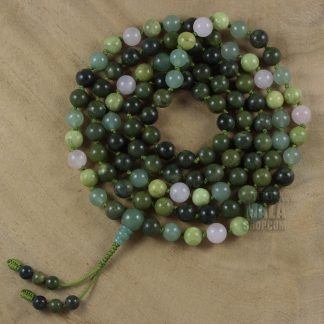
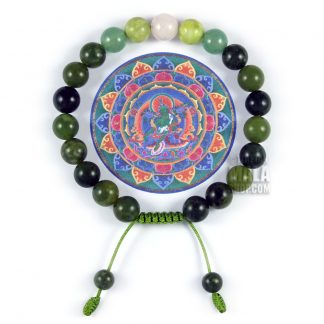
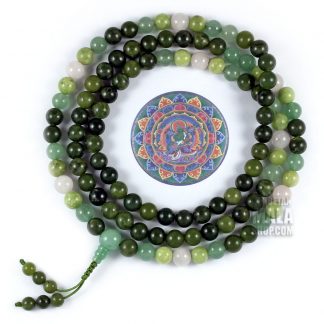
Green Tara: Known as the “Mother of Liberation,” she represents active protection and swift success. Ideal materials are jade and aventurine. Green is the color of the wind element — Tara moves quickly to help those in need. Green stones ground her energetic speed with the stability of the earth.
Manjushri: The Bodhisattva of wisdom who wields a flaming sword to cut through ignorance. Ideal Material are Rudraksha Seeds or Yellow Citrine. Rudraksha is associated with the “fire” of transformation and mental focus, helping to sharpen the intellect and clarify the mind.
Vajrasattva: Used primarily for purification practices to clear negative karma and obstacles. The ideal materials are Clear Quartz or white beads. In tantric practice, white or clear materials signify the washing away of impurities. Copper is often used because of its ability to “conduct” and move stagnant energy during recitation.
3. Colour
Choosing mala beads by colour is a powerful way to align your purchase with your current energetic needs. In colour therapy (chromotherapy), specific hues vibrate at different frequencies, influencing your mood, chakras, and intentions. Here is a guide to choosing your mala based on the energy of colour and colour combinations. For individual colours please see the colour therapy guide.
Red & Black: Grounding and Protection
If you feel scattered, anxious, or overwhelmed by your surroundings, look for deep, earthy tones
Red (Root Chakra): Represents vitality, courage, and survival.
Black: Known for absorbing negative energy and providing “psychic shielding.”
When choosing a mala based on its material, you are selecting a specific energetic frequency. Gemstones, seeds, and woods each interact with your biofield differently, ranging from the grounding denseness of seeds to the high-vibration clarity of crystals. Here is a breakdown of how to choose based on the healing and spiritual qualities of each category.
Seeds are the most traditional material for malas. Because they were once living, they are believed to carry a “living” energy that evolves with your practice.
Rudraksha Seeds: Protection & Power: Known as “Shiva’s Tears,” these are highly protective. They are best for those seeking to overcome obstacles and maintain a strong energetic shield during meditation.
Bodhi Seeds: Awakening: The most revered seed in Buddhism. It represents patience and enlightenment, making it the “gold standard” for practitioners focused on long-term spiritual growth.
Gemstones: Targeted Healing & Chakra Alignment
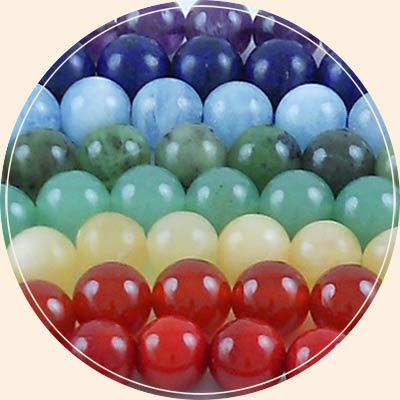
Gemstones are used for specific emotional or physical intentions. Their crystalline structure allows them to hold a very steady, focused vibration. Gemstone Grade – look for “A” grade stones or higher. Quality beads feel heavy in the hand and remain cool to the touch.
Lapis Lazuli: Wisdom & Truth: A “stone of royalty,” it activates the higher mind and enhances intellectual ability. It is ideal for those who need to speak their truth or connect with their intuition.
Carnelian: a high-energy stone known primarily for its ability to stimulate creativity, motivation, and physical vitality.
Aquamarine: a stone of courage and serenity. Its name is derived from the Latin aqua marinus, meaning “water of the sea,” and its spiritual qualities mirror the calming, cleansing nature of the ocean.
Garnet: is traditionally known as the “Stone of Commitment” and is highly valued for its ability to energise and regenerate. It is a powerful grounding stone that turns chaos into clarity, making it a favorite for those going through major life transitions.
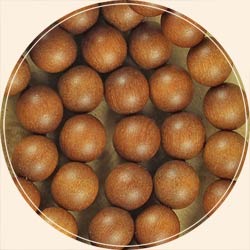
Wood beads are lightweight and often carry a natural scent, which helps engage the senses to keep you present during your mantra.
Sandalwood: Clarity & Serenity: One of the most sacred woods, its scent is used to cool the mind and induce a state of deep tranquility. It is perfect for those dealing with “hot” emotions like anger or frustration.
Bone:Impermanence & Strength: Though technically not wood, bone is often grouped here for its organic feel. It is used to remember the preciousness of life and the strength of ancestral lineage.
5. Evaluate the Craftsmanship
The difference between a mass-produced accessory and a sacred tool lies in the details. A well-made mala should demonstrate professional-grade finishing.
The Knots: for longevity please ensure the mala features hand-knotting between every bead. This prevents the beads from clacking together or scattering if the cord breaks.
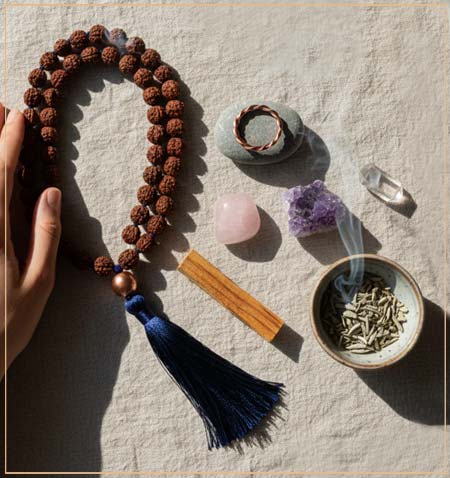
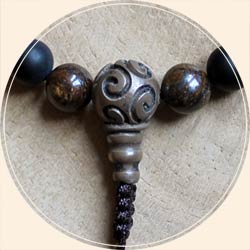
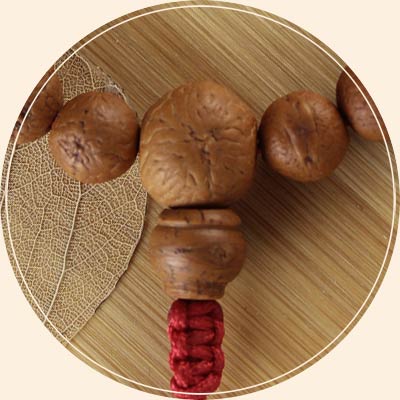
The Guru Bead: Inspect the anchor point. A premium mala features a secure, clean connection at the guru bead.
The Tassel or End Beads: Whether you prefer a traditional silk tassel or a contemporary three-bead finish (representing the Three Jewels), the binding should be tight and symmetrical.
6. Consider the Tactile Flow
A mala is a functional tool. You must be able to move the beads effortlessly between your thumb and finger.
Bead Size: Most traditional malas use 8mm beads, which offer the best balance between weight and ease of use. If you have smaller hands or prefer a lighter feel, 6mm beads provide a more delicate alternative.
The Texture: Consider how the beads feel. Smooth gemstones glide quickly, while textured seeds like Rudraksha provide a “grip” that keeps you present during each mantra.
The Final Connection
Trust Your Intuition
While technical specifications matter, the most important factor is your immediate reaction. If a specific color, stone, or design draws you in repeatedly, that mala likely aligns with your current energetic needs.
Ready to find your anchor? Explore our collection of hand-crafted malas, designed to pair perfectly with our copper tensor rings for ultimate energetic harmony.
Choosing the right mala is a personal ritual. Now that you understand the craft, explore our collection of mala beads to find the one that resonates with your intention. Each piece is hand-finished to the highest standard, ensuring your tool is as enduring as your practice.
The Guru Bead, also known as the Meru, Sumeru or Mother Bead, is the most significant part of a Mala — a string of 108 prayer beads used in Buddhist, Hindu, Jain and yogic traditions for meditation and mantra recitation.
A guru bead is the distinctive bead on a 108 bead mala, the 109th bead, often larger with 3 holes and a conical collar bead. It marks the start and end point of a meditation cycle and symbolises the guru, teacher, guide, or source of wisdom in one’s practice. It serves as the “anchor” of the entire mala, both physically and spiritually.
The Symbolic Meaning of the Guru Bead
The term Guru in Sanskrit translates to “teacher” or “dispeller of darkness.” Therefore, the guru bead represents:
Spiritual Guidance: it honors the relationship between a student and their teacher or guru who imparts wisdom.
Completion and renewal: it marks the point where one full round of mantra recitation ends and a new one begins.
A State of Awareness: it symbolises the beginning and the end of a spiritual cycle.
Mindfulness anchor: it helps practitioners stay aware of their place in the cycle.
The Divine Source: in many traditions, it is seen as the seat of the divine or the “summit” of a mountain (hence the name Meru, after the sacred cosmic mountain).
Physical Characteristics
We craft the guru bead to stand out from the other beads so you can easily feel it without looking.
Placement: it is the 109th bead, located at the join of the mala where the two ends of the thread meet.
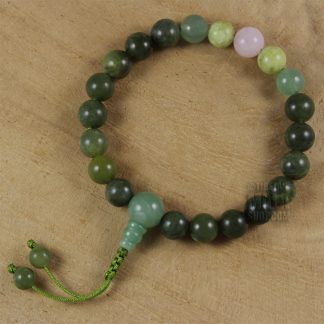
Structure: it often consists of two parts: a larger spherical bead and a smaller, tower-shaped bead called a Stupa (which represents the enlightened mind).
The Tassel: a silk or cotton tassel is usually attached below the guru bead. This represents the Lotus Flower (purity) and the idea that all strands of existence are interconnected.
End Beads: these three end beads offer an elegant alternative to the tassel, drawing inspiration from the Buddhist teachings of the Three Jewels (the Buddha, the Dharma & the Sangha). Six end beads complete the mala, representing the Six Perfections of the spiritual path (generosity, ethics, patience, enthusiastic perseverance, concentration & wisdom).
How It Is Used in Practice
The guru bead is a pause point during mantra meditation. When you are counting mantras and reach the guru bead, you stop, take a moment of reflection, and then reverse the direction of the beads. This reversal in direction is a symbol of turning your attention inward rather than just moving in circles.
The guru bead is not counted during the mantra count.
Traditionally, you never “cross over” the guru bead during mantra recitation.
Step 1: Set an intention then begin the mantra meditation with the bead after the guru bead.
Step 2: Each mantra is counted on a bead using the thumb and finger.
Step 3: When you reach the guru bead again, you do not cross over it; instead, you turn the mala around and continue in the opposite direction.
Step 4: take a moment to sit in silence, offering gratitude or a final intention.
Step 5: if you want to do another round, simply flip the mala around and go back in the opposite direction from which you came.
We design the majority of our mala beads with a three-hole guru bead, while offering a two-hole alternative for those seeking a different style.
A Five Step Beginner’s Guide to Mala Beads Meditation
Mala beads (or Japa Malas) have been used for thousands of years as a tool for meditation and mindfulness. While they can look like beaded jewelry, they are designed to help you count breaths or mantras so you can focus on your internal state rather than keeping track of numbers. Here is a guide on how to use them effectively.
Step 1. How to Hold Your Mala
In many traditions (especially Hindu and some Buddhist lineages), there are specific guidelines for handling the beads to maintain their sacred energy.
The Hand: traditionally, the right hand is used to hold the mala. In some cultures, the left hand is considered “unclean,” though in Tibetan Buddhism, either hand is often acceptable.
The Fingers: drape the mala over your middle or ring finger.
The Thumb: use your thumb to “hook” a bead and pull it toward you as you complete a mantra or breath.
The Index Finger: most traditions suggest keeping your index (pointer) finger away from the beads. It is often seen as representing the “ego” or the “accusing finger,” so it’s best to keep it pointed away or tucked in.
Step 2. The Meditation Process
The goal is to move through all 108 beads (the traditional number) to complete one full cycle of meditation.
Start at the Guru Bead: this is the larger bead at the center, often marked by a tassel. Do not count this bead; it is your starting and ending point.
The First Bead: start with the bead immediately to the right (or left) of the Guru bead.
One Bead, One Mantra: for every bead you touch, recite your chosen mantra once (silently or aloud).
One Bead, One Breath: if you aren’t using a mantra, simply take one full inhale and exhale for every bead you move. Common Mantras: “Om,” “I am at peace,” or “Om Mani Padme Hum.”
The Pulling Motion: gently pull the bead toward your body as you finish the mantra, symbolising that you are drawing the energy or intention into yourself.
Step 3. The “Guru Bead” Guidance
When you have gone all the way around the 108 beads and reach the Guru bead again, do not cross over it. Crossing over the Guru bead is traditionally seen as “stepping over your teacher.”
To Stop: take a moment to sit in silence, offering gratitude or a final intention.
To Continue: if you want to do another round, simply flip the mala around and go back in the opposite direction from which you came.
Step 4. Why 108 Beads?
You might wonder why that specific number. In Vedic culture, 108 is considered a sacred number representing the wholeness of existence:
Energy Channels: it is said there are 108 nadis (energy lines) that converge to form the heart chakra.
Cosmic Scale: the diameter of the Sun is roughly 108 times the diameter of the Earth.
Alphabet: the Sanskrit alphabet has 54 letters, each with a masculine and feminine form (54 x 2 = 108).
The Counter Beads: there are often an extra 3 counter beads, also known as spacer beads or marker beads. They are especially common in Tibetan Buddhist malas, and they serve both a practical and a symbolic purpose. While a standard mala has 108 beads, a mala with these 3 spacers will often have a total of 111 beads (plus the Guru bead).
The most common reason for those three beads is to divide the 108 beads into four equal sections of 27. In a long meditation session, it’s easy for the mind to wander. The spacer bead gently nudges you back to the present moment and lets you know you are quarter, half the way through your practice without you having to open your eyes.
Step 5. Care and Cleansing
Because malas are “kinesthetic tools,” they absorb the energy of your practice and the oils from your skin.
Cleansing: you can “reset” the energy of your beads by placing them in the light of a full moon or by “smudging” them with sage or palo santo smoke.
Physical Care: if your beads are wood (like sandalwood) or seeds (like Rudraksha), avoid getting them wet, as they can crack. If they get dirty, a very soft, damp cloth is best.
Storage: when not in use, keep them in a dedicated pouch or on a home altar rather than leaving them on the floor.
A Comprehensive Guide to Their Benefits and Applications
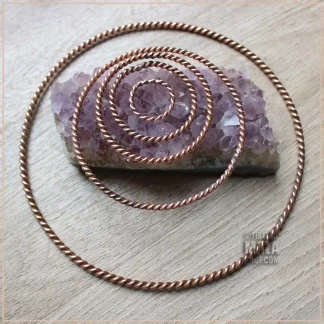
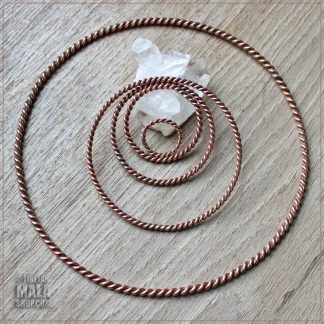
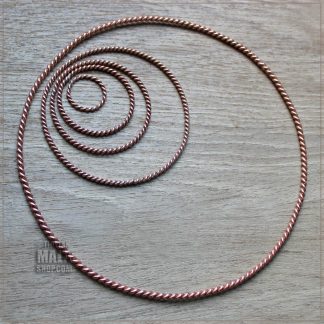
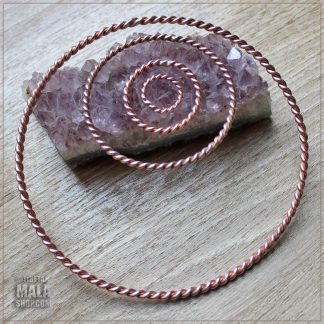
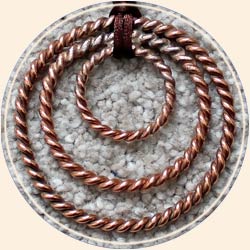
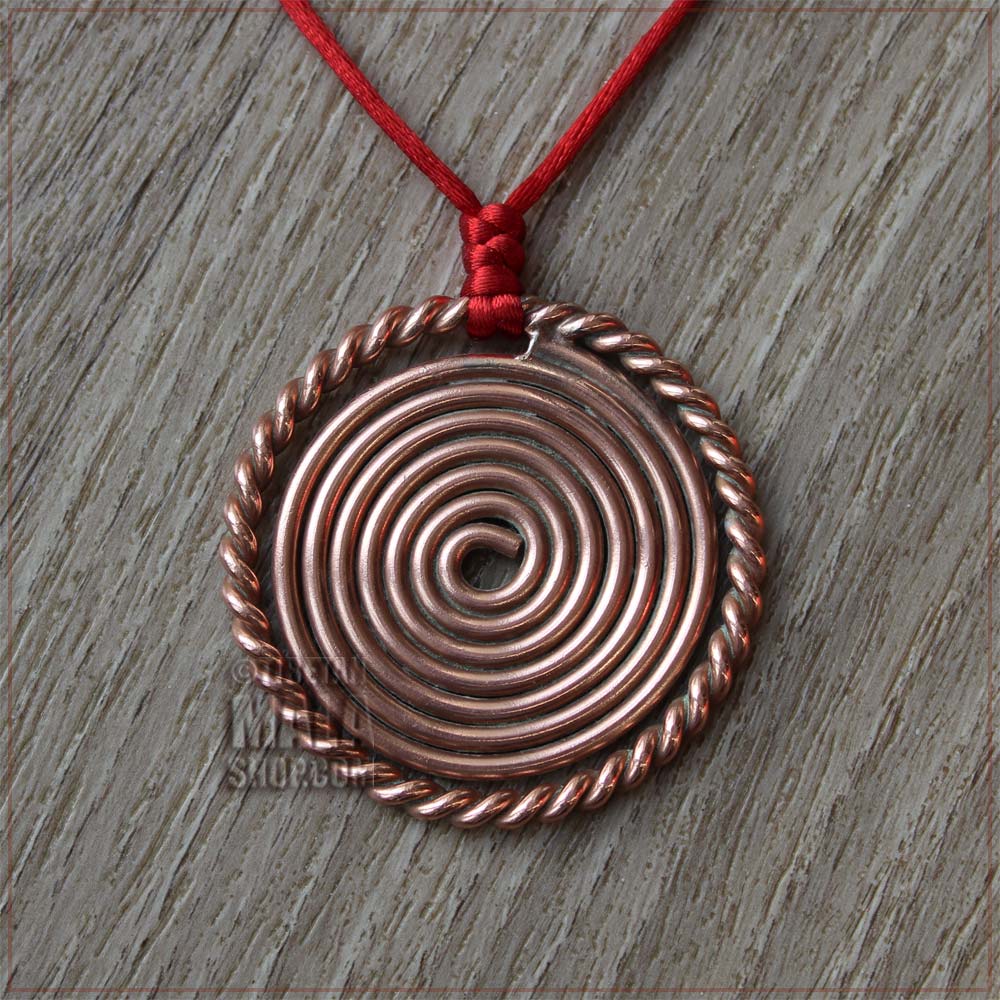
A tensor ring is typically crafted from copper wire, twisted and cut to a specific length that resonates at particular frequencies. The process of creating a tensor ring involves folding the wire in half, twisting it, cutting it to a precise cubit length, then shaping the twisted wire into a ring. The ring is then joined and polished. This crafting process imbues the tensor ring with energetic properties that influence the environment and the human body.
The Science
The scientific foundation of tensor rings is rooted in the concept of energy fields and subtle energies. These fields, often referred to as torsion fields or scalar waves, interact with matter and consciousness in profound ways. Tensor rings generate a coherent energy field that harmonise and balance the energies around them. This energy field is not electromagnetic in nature but operates on a more subtle level, influencing the flow of vital life force or chi. Researchers in the field of subtle energy science suggest that tensor rings can help to neutralise negative energies, enhance positive vibrations, and create a more harmonious environment.
Various experiments have demonstrated changes in the electromagnetic properties of objects placed within the field of a tensor ring. People who use tensor rings report a range of benefits, from increased vitality and mental clarity to improved sleep and emotional balance. As our understanding of subtle energies continues to evolve, tensor rings offer a promising avenue for exploring the intersection of science, consciousness, and well-being.
History & Development
The concept of tensor rings can be traced back to the ancient civilizations such as the Egyptians, Greeks, and Mayans. These ancient cultures recognised that certain geometric shapes and proportions had the power to influence energy and consciousness.
The modern history of tensor rings is closely associated with the pioneering work of Slim Spurling, an inventor, reseracher & scientist who rediscovered these energy tools in the late 20th century. Spurling’s work was grounded in the principles of sacred geometry and subtle energy science. He developed the first tensor rings by carefully twisting, measuring and cutting copper wire to specific lengths, then joining it to form a ring. Spurling showed that these rings could generate a coherent energy field capable of harmonising and balancing the environment and the human body.
Benefits of Using Tensor Rings
The harmonising effect of tensor rings creates a peaceful environment, is conducive to well-being and enhances spiritual practices. The vital energy flow from tensor rings can support various activities, from meditation and creative work to relaxation and sleep.
At home or office
enhance energy flow
create a balanced environment
neutralising negative energies
amplifying positive vibrations
create a space that feels more peaceful, vibrant, and conducive to well-being
good for meditation, creative work, relaxation & sleep
Physical Well Being
complementary approach to health and wellness
improve physical health and vitality
increased energy levels and mental clarity
relief from chronic pain and other ailments
support the body’s natural healing process
promoting balance and harmony at a cellular level
Spiritual Growth
good for meditation and other spiritual practices
enhance spiritual and emotional well-being
inner peace, emotional balance, and connectedness
conducive energy field
achieve deeper states of awareness and insight
releasing emotional blockages and patterns
personal growth and transformation
harmonious and balanced state of being
greater ease and resilience
How to Choose the Right Tensor Ring
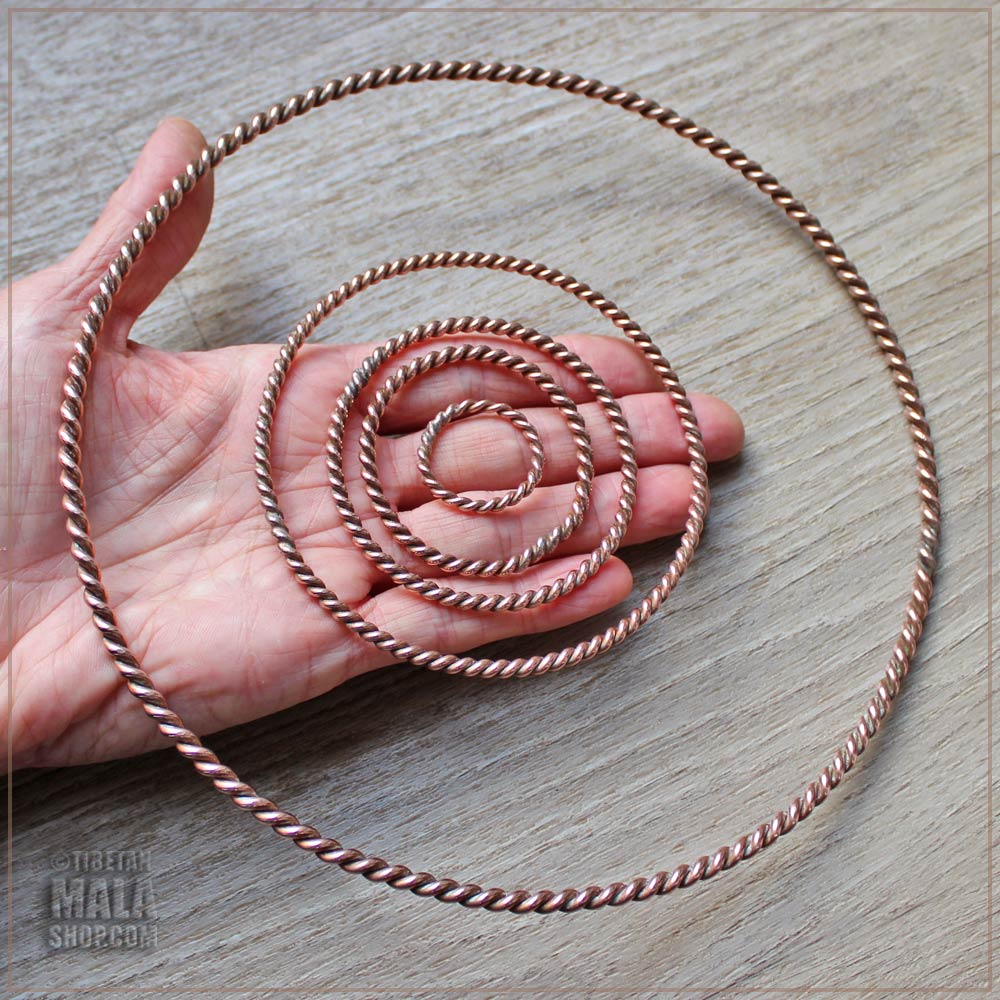
Selecting the right tensor ring depends on various factors, including intention, the specific application, and the desired energy properties. One of the first considerations is the size and gauge of the tensor ring. Smaller rings are often used for personal wear and around water bottles. The larger rings are used for environmental applications, such as harmonising spaces or placing around electronic devices. The gauge of the wire also influences the energy properties of the ring. The thicker gauges generally producing a more robust energy field.
Browse our tensor rings and energy healing tools and discover how our high-vibration copper tensor rings work to align and harmonise your energy.
The Cubit Lengths
The cubit is one of the most famous and widely used ancient units of length. Slim Spurling documented at least nineteen cubit lengths from the ancient world: Sumerian, Egyptian, Sacred, Royal and others. Each cubit length produces a different frequency of tensor ring.
Sacred Cubit
144MHz ~ 52.4cm
Use the Sacred Cubit for journeying, dreams, manifesting abundance, grounding, to sooth & nurture, feminine, to balance the heart chakra, clear unhealthy energy & pollution, neutralise EMFs, and promote physical healing.
Lost Cubit
177MHz ~ 59.67cm
Use the Lost Cubit for mental & emotional healing, to calm & soothe the soul, balance, harmony, meditation, to balance solar plexus, heart & third eye chakras, clear pollution, and for healthy plant growth.
Empowerment Cubit
188MHz ~ 73.3cm
Use the Empowerment Cubit for soul healing, connect with guides, transformation, solar plexus, throat & third eye chakras, empowering throat chakra, clarity, cleanses pineal gland.
Earth Resonance Cubit
333MHz ~ 49.91cm
Use the Earth Resonance Cubit to connect with the Earth’s energetic field, grounding, nurturing, inner peace, comfort, awakening, gentle, balances emotions, serenity, calm, clarity, vitality, flow, EMF shielding, spiritual awareness
Tensor rings offer a wide range of applications that can enhance various aspects of daily life. People commonly use tensor rings in personal spaces to create a more harmonious and balanced environment. Whether used in the home, office, or other settings, tensor rings can help to neutralise negative energies, reduce electromagnetic pollution, and enhance the overall atmosphere. Placing tensor rings near electronic devices, such as computers, smart meters and Wi-Fi routers, can also help to mitigate the effects of electromagnetic radiation, creating a healthier and more balanced space.
In addition to their environmental applications, practitioners also use tensor rings in holistic and energy healing practices. Tensor rings enhance the energy flow and effectiveness of various healing modalities, such as Reiki, acupuncture, and massage therapy. Placing tensor rings on the body or in the healing space creates a coherent energy field that supports the healing process. Additionally, people place tensor rings around water containers, enhancing the water’s energetic properties and making it more beneficial for drinking and other uses.
Tensor rings also have applications in personal development and spiritual practices. Many individuals use tensor rings to enhance their meditation, visualisation, and manifestation practices. By creating a more coherent and balanced energy field, tensor rings can help practitioners to achieve deeper states of awareness and clarity, supporting their spiritual growth and development. Whether used for personal growth, healing, or environmental enhancement, tensor rings offer a versatile and powerful tool for enhancing everyday life.
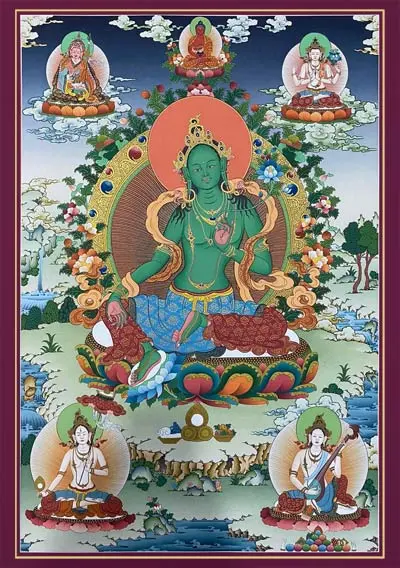
Green Tara is a female bodhisattva representing compassion in action. She responds quickly to help solve problems including liberation from untimely death & recovery from disease. Her mantra is Om Tare Tuttare Ture Soha.
The name Tara, in Sanskrit, means “star” symbolising her ability to guide and illuminate the path of enlightenment. In Tibetan, Tara is known as “Drolma” meaning “liberator” or “goddess”.
She represents compassion in action and is often referred to as the “Mother of all Buddhas” and the “Mother of Liberation”.
The Divine Feminine
The Divine Feminine represents the nurturing, compassionate, and creative aspects of the feminine energy. In Buddhism, one of the most revered embodiments of the Divine Feminine is Green Tara. She is a powerful deity who protects and guides practitioners on their spiritual journey.
Symbolism
Green Tara is often depicted as a young and beautiful goddess with a compassionate expression. The colour green represents her association with nature, growth, and renewal. Green Tara helps to overcome obstacles and is depicted with her right foot extended, symbolising her readiness to help and to spring into action, representing her swift and immediate response to the prayers and calls of her devotees. Her right hand is raised in a gesture of fearlessness, while her left hand holds a blue lotus, symbolising purity and spiritual awakening.
The origins of Green Tara can be traced back to ancient Indian mythology. According to legends, she was born from a tear shed by Avalokiteshvara, the embodiment of compassion, and her purpose was to alleviate the suffering of all beings. Over time, her popularity spread to other parts of Asia, including Tibet, where she became one of the most widely worshipped deities. Today, she is revered not only by Buddhists but also by people from different spiritual backgrounds who seek her guidance, protection, and blessings.
Buddhism
In Buddhism, Green Tara is considered to be an embodiment of the active and compassionate aspect of enlightenment. She is believed to offer swift and immediate assistance to those who call upon her, helping them overcome obstacles, fears, and challenges on their spiritual path. She is also regarded as a Bodhisattva, a being who has attained enlightenment but chooses to remain in the cycle of birth and death to assist others in their journey towards liberation. Her presence represents the ever-present compassion and guidance of the Divine Feminine in the lives of practitioners.
Green Tara’s qualities and attributes
Green Tara is associated with numerous qualities and attributes that make her a powerful and revered figure in Buddhism. She is known for her compassion, wisdom, fearlessness, and quick response to the needs of beings. Tara’s compassion extends to all realms of existence, and she is believed to help individuals overcome both physical and spiritual obstacles. Her wisdom is said to be as vast as the ocean, and she guides practitioners towards clarity, insight, and liberation. She embodies the essence of fearlessness, inspiring her devotees to face challenges with courage and determination.
Green Tara mantras and chants
Mantras and chants have been used for centuries as a means of invoking the Divine and connecting with spiritual energies. The mantra “Om Tare Tuttare Ture Soha” invokes the essence of Green Tara’s blessings and qualities. Reciting this mantra with devotion and concentration can help practitioners align their energy with that of Tara and invite her protection, guidance, and transformative power into their lives. Chanting the mantra can be done during meditation, as a daily practice, or in times of need for support and assistance.
How to connect with Green Tara
Connecting with Green Tara requires a sincere and heartfelt intention to seek her guidance and blessings. One can establish a connection through meditation, prayer, and the cultivation of devotion. Setting up a sacred space dedicated to Green Tara can create a conducive environment for connection and practice. This space can be adorned with images or statues of Green Tara, along with offerings such as flowers, incense, and candles. Regularly spending time in this sacred space, engaging in meditation and prayer, can deepen the connection with Tara and invite her presence into one’s life.
Green Tara meditation practices
Meditation is a powerful tool for connecting with Green Tara and experiencing her transformative energy. One common meditation practice associated with Green Tara is visualisation. In this practice, practitioners visualise Green Tara in front of them, radiating with a vibrant green light. They imagine her compassionate gaze, her outstretched hand, and the lotus she holds. As they continue to visualise, they can also recite her mantra or chant her name, deepening the focus and connection. This meditation practice helps cultivate her qualities such as compassion, fearlessness and wisdom.
Rituals and Offerings
Rituals and offerings play an important role in connecting with Green Tara and expressing devotion. Lighting incense, offering flowers, and lighting candles are common ways to create a sacred atmosphere and invite the presence of Green Tara. Water offerings are also made, symbolising purification and the offering of life-giving sustenance. Additionally, practitioners may create or purchase sacred objects such as malas (prayer beads) or thangkas (religious paintings) depicting Green Tara, as a way to honor and connect with her energy. Engaging in rituals and offerings with sincerity and reverence strengthens the bond with Tara and deepens the connection with the Divine Feminine.
The Timeless Wisdom of Green Tara
Green Tara represents the Divine Feminine energy that resides within all beings. By cultivating a connection with her, we can tap into this energy and unleash its transformative power in our lives. Through her symbolism, qualities, and practices, she guides us towards compassion, wisdom, fearlessness, and liberation. She offers her protection and assistance to those who seek her guidance, helping us overcome obstacles and find clarity on our spiritual path. By embracing the power of the Divine Feminine with her, we can awaken to our true nature and embody the qualities that lead to a more compassionate and enlightened existence.
Would you like to learn how to meditate? Meditation is a fantastic way to relax and clear your mind.
Here’s a simple guide to get you started:
Find a Quiet Spot: Look for a comfortable, quiet place where you won’t be disturbed.
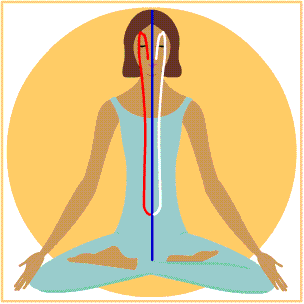
Sit Comfortably: You can sit on a chair, cushion, or floor—just ensure your back is straight and you’re comfortable.
Close Your Eyes: This helps to minimize distractions and focus inward.
Breathe Naturally: Don’t try to control your breathing; just let it flow naturally.
Focus on Your Breath: Pay attention to the sensation of your breath entering and leaving your body. Feel the rise and fall of your chest or the air flowing through your nostrils.
Notice Your Thoughts: If your mind starts to wander, gently bring your focus back to your breath without judgment. It’s natural for thoughts to arise.
Stay for a Few Minutes: Start with just 5-10 minutes. You can gradually increase the duration as you get more comfortable with the practice.
End Gently: When you’re ready to finish, open your eyes slowly and take a moment to appreciate the calmness before getting up.
Remember, meditation is a practice, learning how to meditate is a process and gets easier with time. Try to be patient and kind to yourself. How do you feel about giving it a try?
The dharma wheel, or dharmachakra in Sanskrit, is one of the oldest symbols of Buddhism. When the wheel has eight spokes, the spokes represent the components of the Eightfold Path.
The Noble Eightfold Path
Principles to create lasting positive change within daily life
The noble eightfold path, also known as the Buddhist eightfold path, goes beyond a simple self-help concept. It serves as a complete roadmap to guide and improve every aspect of our lives – from thoughts and actions to daily habits and relationships. The Eightfold Path originates from the teachings of Siddhartha Gautama, who became known as the Buddha after achieving enlightenment.
What is the Eightfold Path?
A balanced approach to life
In Buddhism, the significance of the Eightfold Path lies in its ability to address the fundamental causes of suffering, known as the Four Noble Truths. The path offers a practical means to navigate the complexities of existence, encouraging practitioners to cultivate qualities such as compassion, mindfulness, and insight. By engaging with each aspect of the path, individuals can gradually transform their thoughts, actions, and perceptions, leading to the cessation of suffering and the attainment of enlightenment. The Eightfold Path consists of eight components: Right Speech, Right Action, Right Livelihood, Right Effort, Right Mindfulness, Right Concentration, Right Intention and Right View.
correct action
tigers eye
Right Action emphasises the importance of ethical behavior, promoting actions that do not cause harm to oneself or others.
correct effort
carnelian
Right effort means cultivating positive and wholesome qualities through persistence and following through our positive intentions.
correct livelihood
citrine
Right Livelihood guides practitioners towards professions that are beneficial and do not contribute to suffering, encouraging a lifestyle aligned with ethical principles.
correct mindfulness
fluorite
Mindfulness is the practice of being present in the moment by observing the body, mind and feelings with non-judgmental awareness.
correct speech
blue lace agate
Right Speech encourages individuals to communicate truthfully, kindly, and constructively, recognizing the power of words to uplift or harm.
correct concentration
lepidolite
Right concentration is the development of a well focused mind. Insight and mental calmness is achieved through single pointed meditation by holding the mind steady on a single object.
correct view
amethyst
Right View refers to understanding the nature of reality as it is, which includes comprehending the Four Noble Truths and the impermanence of all things.
correct intention
selenite
Intention or motivation toward non-violence and striving for a positive outcome.
The process of making a cold cast bronze statue starts with sculpting the original statue using sculptor’s plasteline. Plasteline is a much more detailed medium than clay, although it does take longer to get a smooth finish. Creating the original takes hours and hours of detailed work – this is by far the longest part of the whole process.
The subject is a Buddhist monk sat in meditation in the lotus position with hands holding a bowl of nectar. He wears traditional monks robes and the distinctive and beautiful yellow hat. The yellow hat is associated with the Gelug Pa tradition of Tibetan Buddhism. The Gelug Pa, or Gelug, tradition was founded in the 14th century by Lama Tsongkhapa (1357 – 1419).
The goal of this sculpture, as with all works of art, is to transmit the energy and feelings of the sculptor’s intention through the medium, in this case through a bronze statue. We wanted to convey calm, steady, uplifting and aligned energy through the sculpture so when viewed this energy is imparted to you, giving meaning and purpose to the artwork.
The 7 step process is detailed below. The finished sculpture can be purchased here in our online shop. We are now in the process of making the next sculpture, so watch this space!
STEP 1.
Preparing the sculpture for casting with a circular cardboard barrier to prevent the silicone from flowing away
STEP 2.
The first coat of silicone is applied with a brush ensuring all detail is covered with no air bubbles
STEP 3.
The silicone is thickened and applied in a thick paste. Each layer is applied when the previous layer is touch dry.
STEP 4.
When the silicone is an inch thick it is left to fully cure and dry for several days
STEP 5.
The silicone mould is cut at the back with a sharp scalpel, in a zig zag style, to release the statue inside
STEP 6.
Powdered bronze is applied to the inner surface of the mould before adding a mix of 70% bronze powder suspended in 30% resin
STEP 7.
The statue is released from the mould, then the final and 7th step is to lightly sand and polish the figurine to reveal the beautiful deep golden sheen of the bronze.
It is a new day. The lush fresh light beams heavy through the dense forest of life. We are one and new to the changes afoot. It is not difficult or easy, it is different. Each one has a goal and path of understanding, and learning for the future of the human race.
We teach and bring forth the message of oneness to assist the transition with ease and flourishing light, to bring harmony within to troubled minds, and illuminate the direction of peace and healing. They can change in an instant with the correct supportive environment of love. The energy of love is all around and yours for the taking, use it wisely and surround yourself with its vibration, bringing steady calm and balance of the opposites and extremes.
The middle way is a finite line between the love and the hatred, each to their own preference of mode, but with the same result. The goal is love.
Humanity needs this shift, for the love and joy is welcome amongst many, and brings ultimate peace for the planetary system of light and all things. Each man needs love, it is a forgiven right, in the hierarchy of flight and gain, we overcome the tribulations of trouble, and strive for the betterment of the way in all things.
Rest now in your laurels of light for this will show you the path of wonder and delight and gratitude will comfort the cause for your betterment and release the bounds of restriction and allow light to flood the work of all men.
We are peace keepers of harmony, known only to the best of us who try the method with persistence gleaned to all at one.