
A Guide to Finding Your Sacred Tool
Choosing a mala is more than a simple purchase; it is the beginning of a spiritual partnership. Whether you seek a tool for deep mantra meditation or a physical anchor for daily mindfulness, the right beads must resonate with your personal energy and aesthetic standards. Use this guide to navigate the essential elements of a high-quality mala, from sacred materials to the precision of the finish.
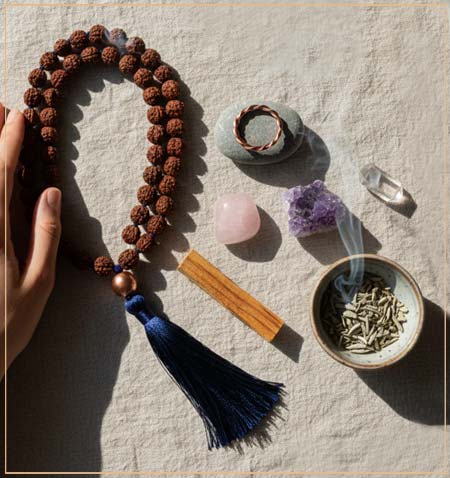
1. Define Your Intention
Before looking at stones or seeds, identify the primary purpose of your mala. Are you seeking physical healing, emotional balance, or a tool for counting 108 mantras?
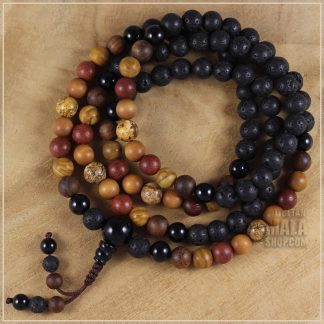
- For Grounding: select earthy materials like Rudraksha seeds or Lava Rock. These organic materials connect you to the physical plane. Black Onyx is great for grounding, strength and for staying focused during stressful times and absorbing negative energy.
- For Clarity: opt for gemstones like Clear Quartz or Amethyst to sharpen focus during meditation.
- For Protection: choose Black Onyx, Tourmaline or Tiger’s Eye to create a sense of energetic shielding.
- For Inner Peace & Focus: choose Sandalwood for calming a busy mind and bringing a sense of “zen” to your space.
- Truth & Wisdom: choose Lapis Lazuli for strengthening your intuition and speaking your authentic truth
- Compassion & Love: choose Rose Quartz or Aventurine for healing emotional wounds and opening the heart to self-love.
- Intuition & Calm: choose Amethyst for deepening meditation and connecting to higher states of consciousness.
- Amplification: choose Clear Quartz for magnifying the power of your mantras and clearing mental “fog.”
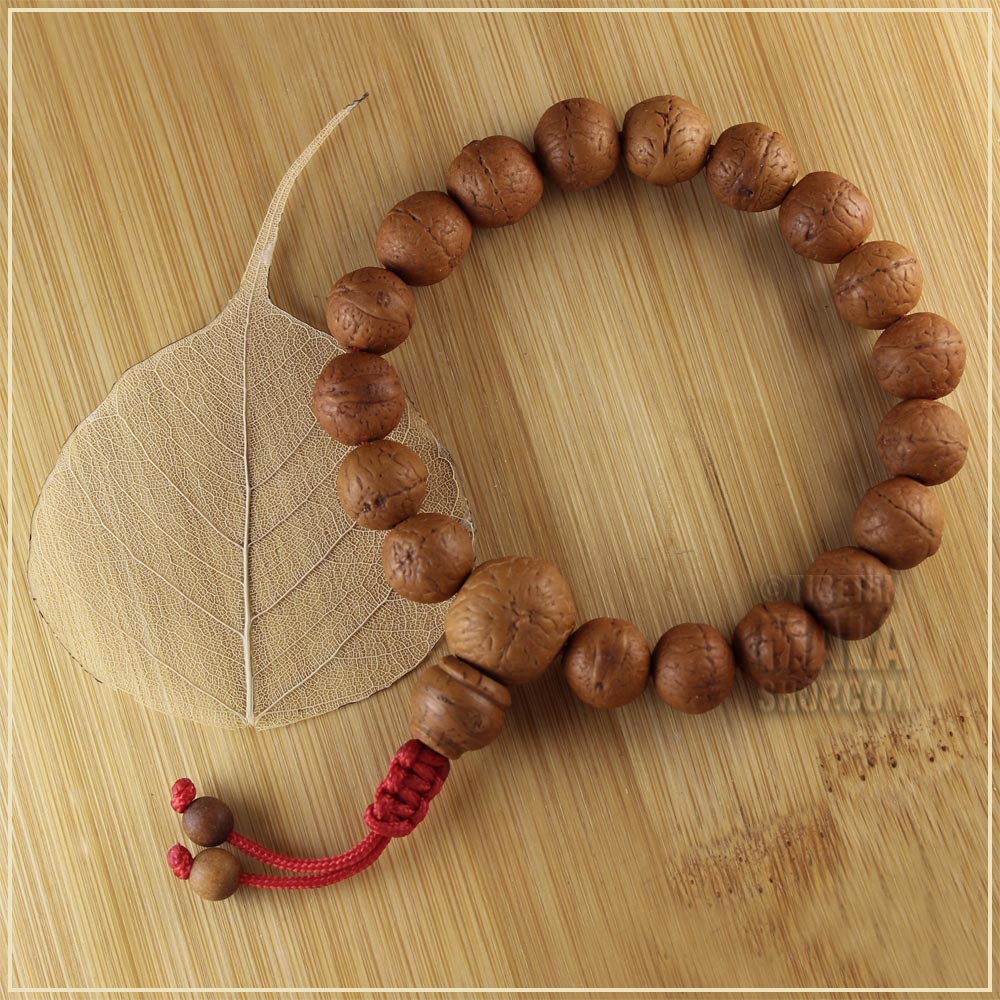
- Enlightenment: choose Bodhi Seed for connecting to ancient lineage and the traditional path of the Buddha.
2. Deity & Mantra
In Buddhist tradition, choosing a mala based on a specific deity and mantra is about aligning the physical material of the beads with the energetic qualities and vows of that figure.
- Medicine Buddha: The Medicine Buddha represents healing and the purification of physical and mental ailments. He is traditionally depicted as Lapis Lazuli blue. The colour reflects the “Lapis Lazuli Light” that emanates from him, symbolising the clarity of a healed mind.
- Shakyamuni Buddha: Choosing a mala for the Shakyamuni Buddha mantra (Om Muni Muni Mahamuniye Svaha) typically focuses on materials that represent awakening, simplicity, and the historical lineage of the Buddha. Ideal Materials are Bodhi Seed, sandalwood, clear quartz, citrine and carnelian.
- Chenrezig: The Bodhisattva of infinite compassion. Chenrezig is often associated with purity and the “Jewel in the Lotus.” Ideal Materials are Lotus Seed or Clear Quartz. These materials represent the stainless, pure nature of compassion.
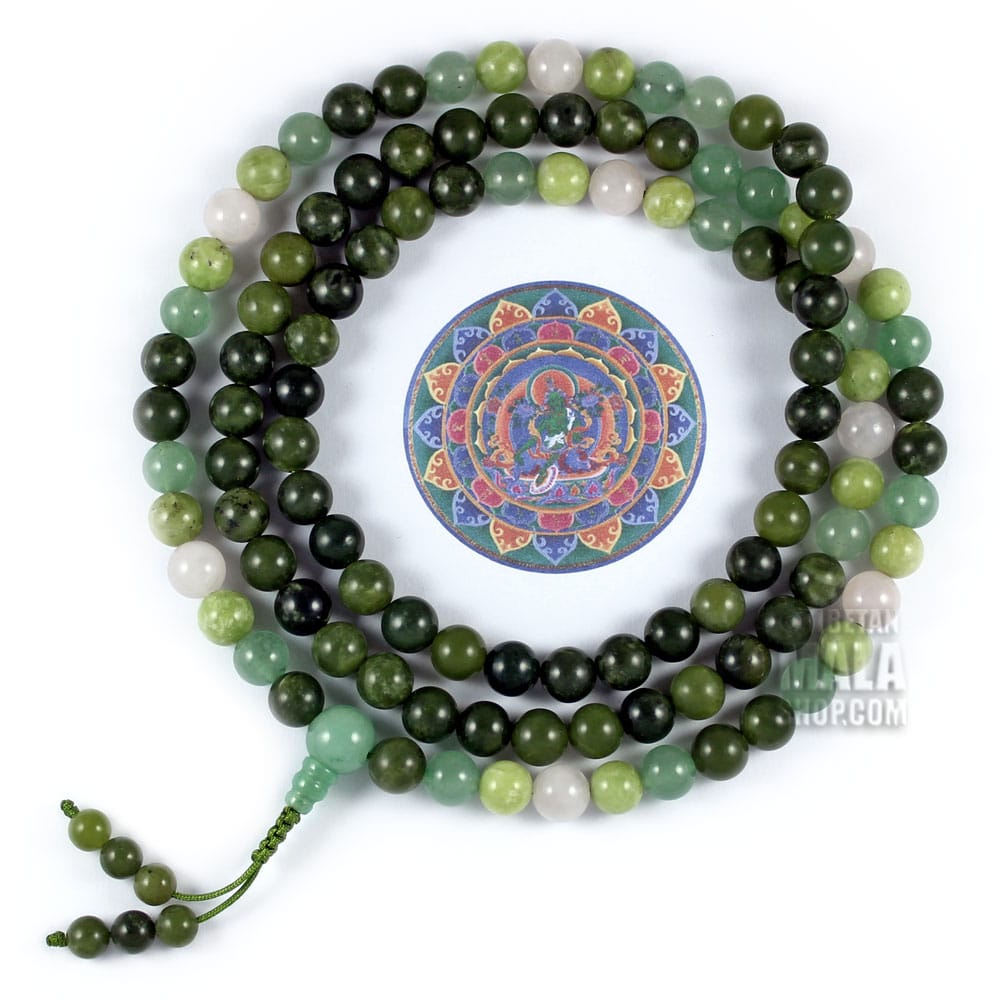
- Green Tara: Known as the “Mother of Liberation,” she represents active protection and swift success. Ideal materials are jade and aventurine. Green is the color of the wind element — Tara moves quickly to help those in need. Green stones ground her energetic speed with the stability of the earth.
- Manjushri: The Bodhisattva of wisdom who wields a flaming sword to cut through ignorance. Ideal Material are Rudraksha Seeds or Yellow Citrine. Rudraksha is associated with the “fire” of transformation and mental focus, helping to sharpen the intellect and clarify the mind.
- Vajrasattva: Used primarily for purification practices to clear negative karma and obstacles. The ideal materials are Clear Quartz or white beads. In tantric practice, white or clear materials signify the washing away of impurities. Copper is often used because of its ability to “conduct” and move stagnant energy during recitation.
3. Colour
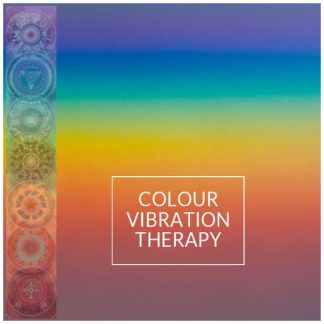
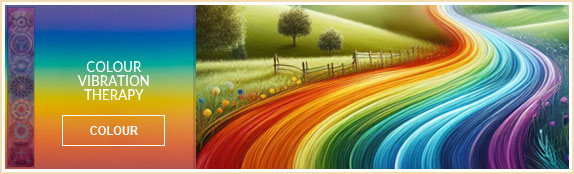
Choosing mala beads by colour is a powerful way to align your purchase with your current energetic needs. In colour therapy (chromotherapy), specific hues vibrate at different frequencies, influencing your mood, chakras, and intentions. Here is a guide to choosing your mala based on the energy of colour and colour combinations. For individual colours please see the colour therapy guide.
Red & Black: Grounding and Protection
If you feel scattered, anxious, or overwhelmed by your surroundings, look for deep, earthy tones
- Red (Root Chakra): Represents vitality, courage, and survival.
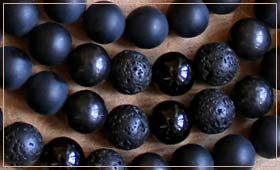
- Black: Known for absorbing negative energy and providing “psychic shielding.”
- Stones to look for: Red Jasper, Black Onyx, Obsidian, or Lava Stone.
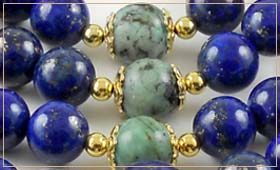
Blue & Turquoise: Communication and Truth
Choose these colors if you are a teacher, public speaker, or someone looking to find their “authentic voice.”
- Blue (Throat Chakra): Promotes calm, clear communication and logical thought.
- Turquoise: Often used for healing and balancing the “bridge” between the heart and the mind.
- Stones to look for: Lapis Lazuli, Blue Apatite, or Turquoise.
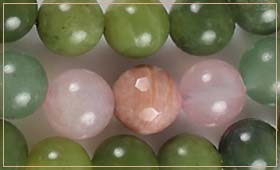
Green & Pink: Love and Compassion
These colors resonate with the Heart Chakra. Choose them if you are working on self-love or healing from emotional grief.
- Green: Represents growth, abundance, and the healing power of nature.
- Pink: The color of unconditional love, kindness, and gentleness.
- Stones to look for: Jade, Aventurine, Rose Quartz, or Rhodonite.
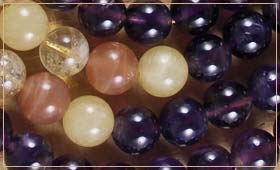
Purple & Gold: Intuition and Connection
If your goal is deep meditation or connecting with your “Higher Self,” look for the colors of the Crown and Third Eye.
- Purple: Represents intuition, spiritual mastery, and peace.
- Gold/Yellow: Represents the “inner sun,” personal power, and confidence.
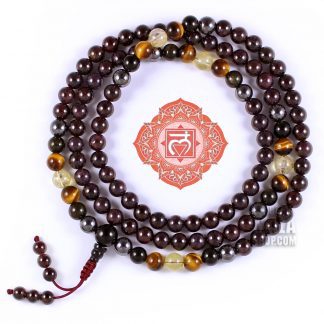
- Stones to look for: Amethyst (Purple), Citrine (Yellow), or Tiger’s Eye (Gold).
4. Material
When choosing a mala based on its material, you are selecting a specific energetic frequency. Gemstones, seeds, and woods each interact with your biofield differently, ranging from the grounding denseness of seeds to the high-vibration clarity of crystals. Here is a breakdown of how to choose based on the healing and spiritual qualities of each category.
Sacred Seeds: Spiritual Connection & Transformation
Seeds are the most traditional material for malas. Because they were once living, they are believed to carry a “living” energy that evolves with your practice.
- Rudraksha Seeds: Protection & Power: Known as “Shiva’s Tears,” these are highly protective. They are best for those seeking to overcome obstacles and maintain a strong energetic shield during meditation.
- Bodhi Seeds: Awakening: The most revered seed in Buddhism. It represents patience and enlightenment, making it the “gold standard” for practitioners focused on long-term spiritual growth.
Gemstones: Targeted Healing & Chakra Alignment
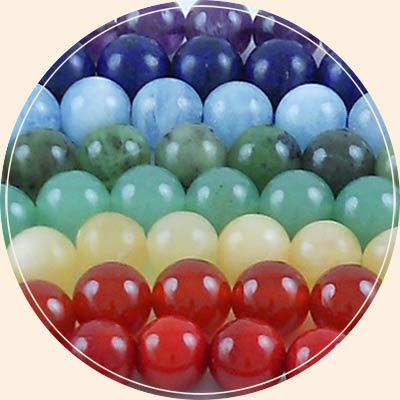
Gemstones are used for specific emotional or physical intentions. Their crystalline structure allows them to hold a very steady, focused vibration. Gemstone Grade – look for “A” grade stones or higher. Quality beads feel heavy in the hand and remain cool to the touch.
- Lapis Lazuli: Wisdom & Truth: A “stone of royalty,” it activates the higher mind and enhances intellectual ability. It is ideal for those who need to speak their truth or connect with their intuition.
- Carnelian: a high-energy stone known primarily for its ability to stimulate creativity, motivation, and physical vitality.
- Aquamarine: a stone of courage and serenity. Its name is derived from the Latin aqua marinus, meaning “water of the sea,” and its spiritual qualities mirror the calming, cleansing nature of the ocean.
- Garnet: is traditionally known as the “Stone of Commitment” and is highly valued for its ability to energise and regenerate. It is a powerful grounding stone that turns chaos into clarity, making it a favorite for those going through major life transitions.
For a full detailed list of the benefits of gemstones please read the healing power of gemstones.
Sacred Woods: Grounding & Peace
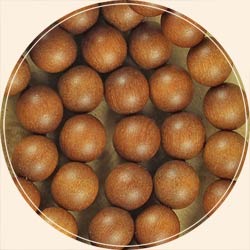
Wood beads are lightweight and often carry a natural scent, which helps engage the senses to keep you present during your mantra.
- Sandalwood: Clarity & Serenity: One of the most sacred woods, its scent is used to cool the mind and induce a state of deep tranquility. It is perfect for those dealing with “hot” emotions like anger or frustration.
- Bone: Impermanence & Strength: Though technically not wood, bone is often grouped here for its organic feel. It is used to remember the preciousness of life and the strength of ancestral lineage.
5. Evaluate the Craftsmanship
The difference between a mass-produced accessory and a sacred tool lies in the details. A well-made mala should demonstrate professional-grade finishing.
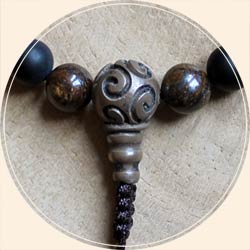
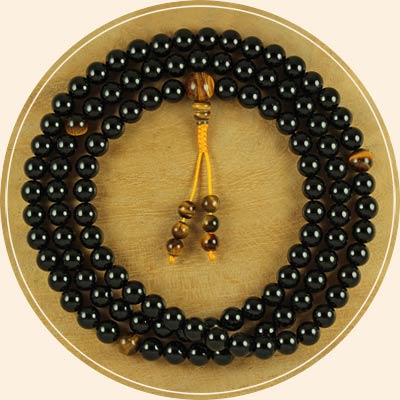
- The Knots: for longevity please ensure the mala features hand-knotting between every bead. This prevents the beads from clacking together or scattering if the cord breaks.
- The Guru Bead: Inspect the anchor point. A premium mala features a secure, clean connection at the guru bead.
- The Tassel or End Beads: Whether you prefer a traditional silk tassel or a contemporary three-bead finish (representing the Three Jewels), the binding should be tight and symmetrical.
6. Consider the Tactile Flow
A mala is a functional tool. You must be able to move the beads effortlessly between your thumb and finger.
- Bead Size: Most traditional malas use 8mm beads, which offer the best balance between weight and ease of use. If you have smaller hands or prefer a lighter feel, 6mm beads provide a more delicate alternative.
- The Texture: Consider how the beads feel. Smooth gemstones glide quickly, while textured seeds like Rudraksha provide a “grip” that keeps you present during each mantra.
The Final Connection
Trust Your Intuition
While technical specifications matter, the most important factor is your immediate reaction. If a specific color, stone, or design draws you in repeatedly, that mala likely aligns with your current energetic needs.
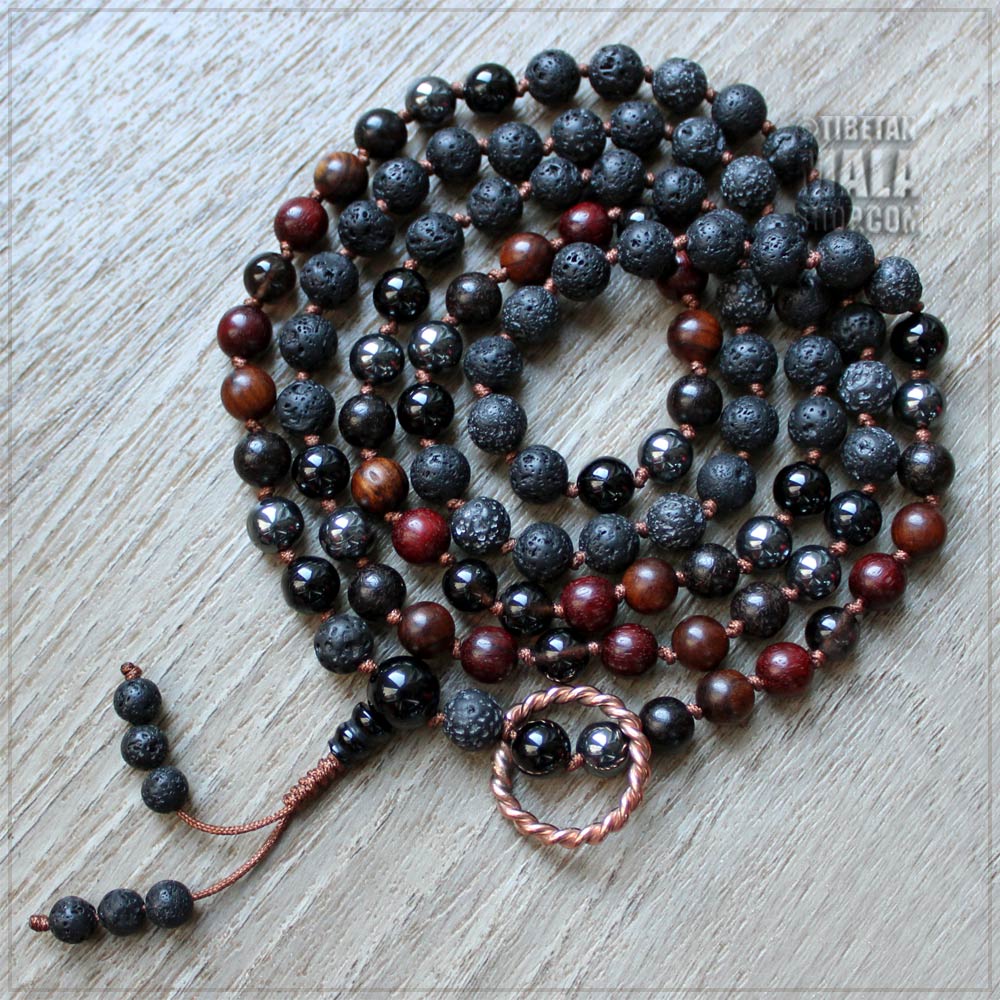
Ready to find your anchor? Explore our collection of hand-crafted malas, designed to pair perfectly with our copper tensor rings for ultimate energetic harmony.
Choosing the right mala is a personal ritual. Now that you understand the craft, explore our collection of mala beads to find the one that resonates with your intention. Each piece is hand-finished to the highest standard, ensuring your tool is as enduring as your practice.